The fusion of human creativity with artificial intelligence is no longer science fiction—it’s reshaping our present and defining our future in ways we’re only beginning to understand.

As we stand at the crossroads of technological evolution, the relationship between humans and artificial intelligence has become one of the most compelling philosophical debates of our time. The concept of human-AI symbiosis represents more than mere collaboration; it embodies a transformative partnership that could redefine the boundaries of human potential and reshape civilization as we know it.
This emerging philosophy challenges us to reconsider fundamental questions about consciousness, creativity, productivity, and what it truly means to be human in an increasingly digital world. Rather than viewing AI as a threat to human relevance, the symbiotic perspective invites us to explore how these technologies can amplify our capabilities, compensate for our limitations, and help us tackle challenges that have long seemed insurmountable.
🤝 The Foundation of Collaborative Intelligence
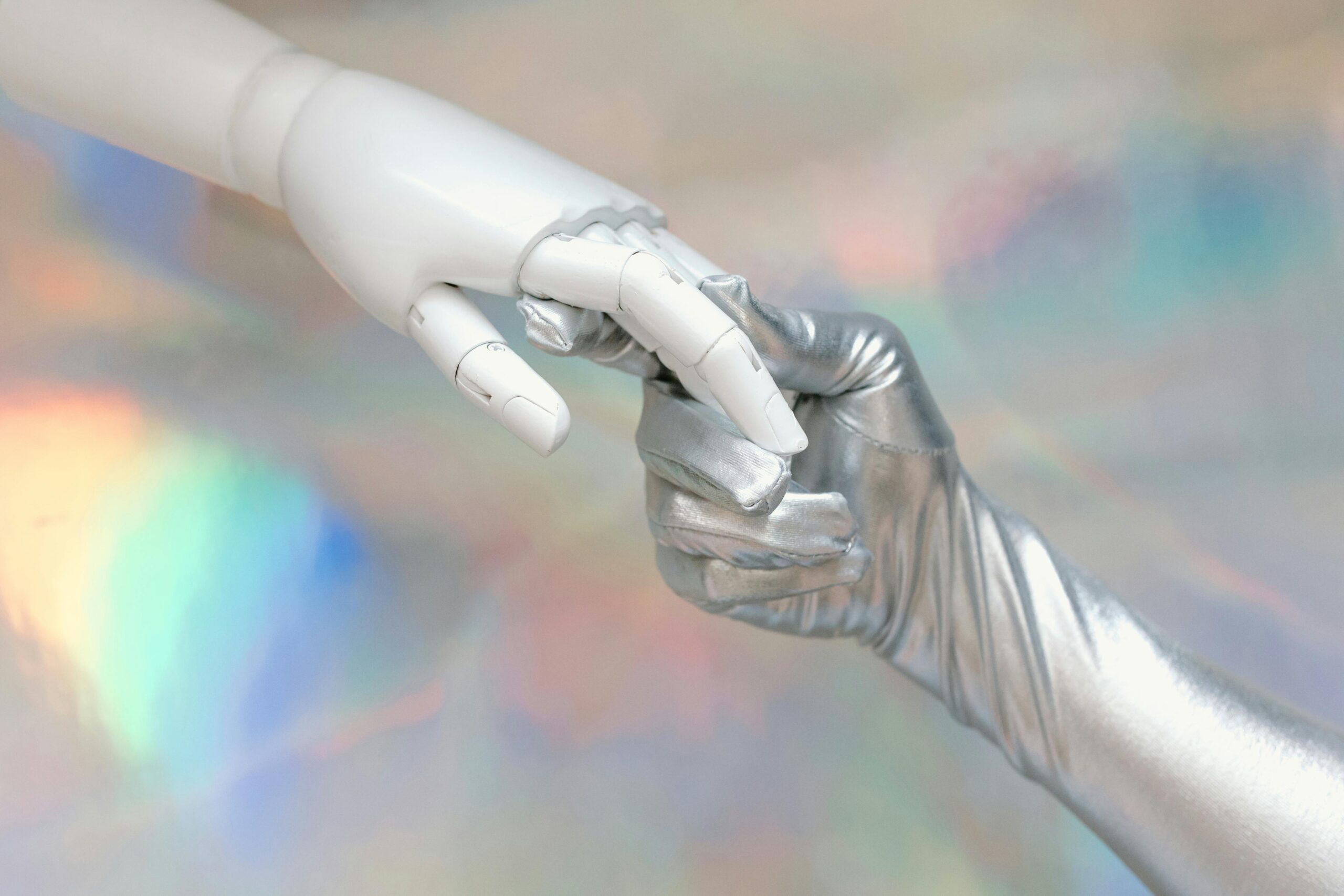
At its core, human-AI symbiosis is built on the principle that the whole is greater than the sum of its parts. Humans bring emotional intelligence, ethical reasoning, contextual understanding, and creative intuition to the table. Artificial intelligence contributes computational power, pattern recognition across vast datasets, tireless consistency, and the ability to process information at scales impossible for biological minds.
This complementary relationship creates what researchers call “collaborative intelligence”—a dynamic where human judgment guides AI capabilities, while AI augments human decision-making. The philosophy recognizes that neither entity needs to become more like the other; instead, they should leverage their distinct strengths to achieve outcomes neither could accomplish alone.
Consider how AI systems already assist physicians in diagnosing diseases by analyzing medical images with remarkable accuracy. Yet the final decision, the bedside manner, the consideration of a patient’s unique circumstances—these remain fundamentally human contributions. The doctor doesn’t become obsolete; they become more effective, more precise, and ultimately better equipped to save lives.
Beyond the Binary: Rejecting the Competition Narrative
Much of the anxiety surrounding artificial intelligence stems from framing the relationship as inherently competitive—humans versus machines in a zero-sum game. This perspective is not only philosophically limited but practically counterproductive. The symbiotic approach rejects this binary thinking.
History offers valuable lessons here. Every major technological leap—from the printing press to the internet—was initially met with fears of human displacement. Yet each innovation ultimately expanded human capacity rather than replacing it. The printing press didn’t eliminate thinkers; it amplified their reach. The internet didn’t make human connection obsolete; it created new dimensions for it.
Human-AI symbiosis operates on the same principle of augmentation rather than replacement. The goal isn’t to create artificial minds that think exactly like humans, but to develop complementary systems that think differently, offering perspectives and capabilities that enhance our own cognitive toolkit.
💡 Unlocking Creative Synergies
One of the most exciting frontiers in human-AI symbiosis lies in the realm of creativity. Conventional wisdom once held that creativity was exclusively human territory—the final bastion that machines could never breach. Recent developments challenge this assumption while simultaneously revealing new possibilities for collaborative creation.
AI systems can now generate art, compose music, write poetry, and design products. Rather than viewing this as competition, forward-thinking creators are embracing these tools as collaborative partners. A graphic designer might use AI to rapidly generate dozens of layout variations, then apply human judgment to select and refine the most promising options. A novelist might use language models to overcome writer’s block or explore alternative plot directions.
This creative symbiosis doesn’t diminish human artistry—it transforms the creative process itself. Artists spend less time on technical execution and more time on conceptual vision. The role shifts from pure creation to curation, refinement, and the injection of meaning and emotional resonance that only human experience can provide.
The Philosophy of Augmented Creativity
Augmented creativity raises fascinating philosophical questions about authorship, originality, and the nature of creative expression. If an AI generates the initial draft and a human refines it, who is the creator? The answer, from a symbiotic perspective, is that the question itself misunderstands the process.
Creative symbiosis isn’t about assigning credit to discrete contributions but recognizing the emergent properties of the collaboration. Just as a jazz ensemble creates something that transcends individual performances, human-AI creative partnerships produce outcomes that neither could achieve independently. The value lies in the synthesis, not in parsing out percentages of contribution.
🎯 Practical Applications Transforming Industries
The philosophy of human-AI symbiosis isn’t merely theoretical—it’s actively reshaping industries and professions across the global economy. Understanding these practical applications helps ground the abstract concepts in tangible outcomes.
In healthcare, diagnostic AI doesn’t replace doctors but enables them to process patient information more thoroughly, identify subtle patterns in medical imaging, and stay current with rapidly expanding medical literature. The physician’s role evolves toward more holistic patient care, complex decision-making in ambiguous situations, and empathetic communication—all areas where human judgment remains irreplaceable.
Financial services have embraced AI for fraud detection, risk assessment, and market analysis. Yet human financial advisors remain essential for understanding clients’ unique circumstances, life goals, and emotional relationship with money. The symbiosis allows for more informed recommendations grounded in both algorithmic precision and human wisdom.
Education: Personalized Learning at Scale
Educational technology exemplifies symbiotic potential beautifully. AI-powered adaptive learning platforms can tailor educational content to individual students’ pace, learning style, and knowledge gaps—something impossible for a single teacher managing thirty students. However, the teacher’s role in inspiring curiosity, modeling critical thinking, providing emotional support, and facilitating social learning remains irreplaceable.
This combination enables truly personalized education while preserving the irreplaceable human elements of mentorship and intellectual community. Students receive customized instruction optimized to their needs, while teachers focus on higher-order educational goals that require human insight and connection.
⚖️ Ethical Dimensions of Symbiotic Relationships
Any serious exploration of human-AI symbiosis must grapple with profound ethical considerations. The philosophy isn’t value-neutral; it requires careful thought about power dynamics, equity, accountability, and the preservation of human agency and dignity.
Who controls the AI systems that increasingly mediate our work, creativity, and decision-making? How do we ensure that symbiotic relationships empower rather than subordinate human participants? What safeguards prevent AI systems from amplifying human biases or enabling surveillance and manipulation?
These questions don’t have simple answers, but the symbiotic framework provides useful guidance. Ethical human-AI relationships should be characterized by transparency, user agency, accountability, and alignment with human values. AI systems should augment human capabilities without creating new forms of dependence or control.
The Challenge of Algorithmic Bias
AI systems learn from data, and data reflects historical human decisions—including our biases, prejudices, and systematic inequities. When AI amplifies these biases, symbiosis becomes problematic rather than beneficial. Addressing this challenge requires ongoing human oversight, diverse development teams, and commitment to fairness as a core design principle.
The symbiotic approach recognizes that AI isn’t objective—it reflects the values and priorities embedded in its training data and design. Human judgment must therefore remain central to evaluating AI outputs, questioning assumptions, and ensuring that technological augmentation serves justice rather than perpetuating inequality.
🌍 Societal Transformation and the Future of Work
Perhaps nowhere is the philosophy of human-AI symbiosis more consequential than in reimagining the future of work. Automation anxiety is understandable—technology has historically displaced certain jobs while creating new opportunities. The symbiotic perspective offers a framework for navigating this transition more thoughtfully.
Rather than asking which jobs AI will eliminate, we should ask how human-AI partnerships can make work more meaningful, productive, and humane. Routine, repetitive, and dangerous tasks become candidates for automation, freeing humans to focus on work requiring creativity, emotional intelligence, complex judgment, and interpersonal skills.
This transition isn’t automatic or painless. It requires substantial investment in education, retraining programs, and social support systems. The philosophical commitment to symbiosis must be matched by practical policies that ensure technological progress benefits broad segments of society rather than concentrating advantages among a privileged few.
Redefining Productivity and Value
The symbiotic era invites us to reconsider how we measure productivity and value. If AI handles increasing portions of information processing and routine production, human contributions shift toward areas that resist easy quantification—strategic thinking, ethical judgment, creative vision, relationship building, and innovation.
This shift challenges economic models built around time-based compensation and standardized outputs. It suggests that human value in the workplace will increasingly derive from uniquely human capacities rather than our ability to function as biological computers. Embracing this transition requires cultural and institutional changes as profound as the technological ones.
🧠 Cognitive Enhancement and Human Flourishing
The most ambitious vision of human-AI symbiosis imagines not just improved productivity but fundamental enhancement of human cognitive capabilities. AI could function as a “second brain”—extending memory, accelerating problem-solving, facilitating connections between disparate ideas, and enabling modes of thinking currently beyond our biological limitations.
This prospect raises deep philosophical questions about personal identity and cognitive enhancement. If our thinking is augmented by AI systems, do we remain fully ourselves? The symbiotic perspective suggests that humans have always extended cognition through external tools—language, writing, books, computers. AI represents a quantum leap in this trajectory but not a categorical shift.
What matters is preserving human agency, autonomy, and the capacity for independent thought even as we embrace cognitive augmentation. The goal isn’t dependence on AI but partnership that expands our capabilities while maintaining our essential humanity.
Preserving Human Agency in an Augmented World
As AI systems become more sophisticated and integrated into our cognitive processes, maintaining meaningful human control becomes paramount. Symbiosis differs from dependence in that the former empowers while the latter constrains.
Designing AI systems that respect human agency means building in transparency, reversibility, and the ability to understand and challenge AI recommendations. Users should comprehend how AI reaches conclusions, retain final decision-making authority, and be able to disconnect from augmentation systems when desired. These principles ensure that technological enhancement remains a tool for human flourishing rather than a mechanism of control.
🚀 Building Toward a Symbiotic Future
Realizing the potential of human-AI symbiosis requires intentional effort across multiple domains—technological development, policy frameworks, educational systems, and cultural attitudes. The future isn’t predetermined; it will be shaped by choices we make today about how to design, deploy, and govern these powerful technologies.
From a technological perspective, we need AI systems designed with symbiosis in mind—interfaces that facilitate collaboration rather than automation, algorithms that explain their reasoning, and architectures that preserve human judgment at critical decision points. The goal isn’t artificial general intelligence that replaces human thinking but specialized tools that complement it.
Policy frameworks must balance innovation with protection of human rights, privacy, and dignity. Regulation should enable beneficial applications while preventing exploitation and harm. This requires policymakers who understand both the technology and its philosophical implications.
Cultivating Symbiotic Literacy
Perhaps most importantly, realizing the potential of human-AI symbiosis requires widespread literacy about these technologies—not just technical understanding but philosophical sophistication about their implications. Education systems should teach not only how to use AI tools but how to think critically about them, recognize their limitations, and engage with them as partners rather than oracles.
This symbiotic literacy includes understanding AI capabilities and constraints, recognizing when to trust algorithmic recommendations and when to question them, and developing judgment about which tasks benefit from augmentation and which require purely human attention.
🌟 Embracing Possibility Over Fear
The philosophy of human-AI symbiosis ultimately represents a choice—not between uncritical embrace and fearful rejection of AI, but between passive acceptance and active shaping of our technological future. It acknowledges real risks while emphasizing tremendous potential.
History suggests that technology’s impact depends less on its inherent properties than on how we choose to develop and deploy it. Fire can warm homes or destroy forests. Nuclear energy can power cities or devastate them. Similarly, AI can enhance human capabilities and help solve pressing challenges, or it can concentrate power, eliminate opportunities, and diminish human agency.
The symbiotic approach provides philosophical grounding for pursuing the former while avoiding the latter. It insists that technology should serve human flourishing, that development should prioritize augmentation over replacement, and that progress must be measured not just in efficiency gains but in expanded human potential and wellbeing.
As we navigate this transformative era, the philosophy of human-AI symbiosis offers more than abstract theory—it provides a practical framework for building a future where technology amplifies the best of human nature rather than replacing it. This vision requires ongoing dialogue, ethical vigilance, and commitment to ensuring that artificial intelligence ultimately serves authentically human ends.
The brightest future isn’t one where AI thinks for us, but where it thinks with us—where human wisdom guides artificial intelligence, and artificial intelligence expands human possibility. That symbiotic partnership, thoughtfully cultivated, represents our greatest opportunity to address challenges from climate change to disease, from inequality to ignorance, while preserving and enhancing what makes us most fundamentally human: our capacity for growth, connection, creativity, and meaning-making in an ever-evolving world.