
Artificial intelligence is reshaping humanity’s future, but without ethical guardrails, it risks amplifying harm instead of fostering progress and human flourishing.

🧭 Why Ethics Must Guide the Algorithm Revolution
The rise of artificial intelligence has brought unprecedented capabilities to our fingertips, from predictive healthcare diagnostics to autonomous transportation systems. Yet with these advancements comes a profound responsibility: ensuring that the algorithms governing these technologies operate within moral boundaries that reflect our collective values.
Every day, AI systems make millions of decisions that affect human lives. They determine who receives loan approvals, which job candidates advance in hiring processes, what content appears in social media feeds, and even who might be flagged as security risks. These aren’t merely technical calculations—they’re moral judgments encoded in mathematical form.
The challenge lies in translating human ethics, developed over millennia of philosophical discourse and cultural evolution, into computational frameworks that machines can execute. This translation process reveals uncomfortable truths about our own moral inconsistencies while forcing us to articulate values we’ve long taken for granted.
🔍 The Anatomy of Algorithmic Decision-Making
Understanding ethical AI begins with examining how algorithms actually make decisions. Unlike traditional rule-based programming, modern machine learning systems identify patterns in massive datasets and extrapolate from these patterns to make predictions or classifications.
The ethical complications arise because these patterns often reflect historical biases, societal inequalities, and human prejudices embedded in the training data. An algorithm trained on decades of hiring decisions will likely perpetuate gender or racial discrimination if those biases existed in the original data—not because the algorithm harbors prejudice, but because it’s optimized to replicate past patterns.
The Black Box Problem
Many sophisticated AI systems, particularly deep neural networks, operate as “black boxes” where even their creators cannot fully explain why a specific decision was made. This opacity presents serious ethical challenges when AI systems impact fundamental rights like freedom, opportunity, and justice.
How can we hold an algorithm accountable if we cannot trace its reasoning? How do we correct errors when the decision-making process remains inscrutable? These questions demand new approaches to algorithmic transparency and explainability.
⚖️ Core Principles for Ethical AI Development
Building moral algorithms requires adherence to foundational ethical principles that guide development from conception through deployment. These principles serve as guardrails preventing AI systems from straying into harmful territory.
Fairness and Non-Discrimination
AI systems must treat individuals equitably regardless of protected characteristics like race, gender, religion, or socioeconomic status. However, defining “fairness” proves surprisingly complex. Should an algorithm ensure equal outcomes across demographic groups? Equal opportunity? Equal treatment? Different fairness definitions can conflict, requiring careful consideration of context and values.
Researchers have identified over twenty mathematical definitions of fairness, many mutually exclusive. A credit scoring algorithm might achieve demographic parity by approving loans at equal rates across racial groups, yet this approach could conflict with individual fairness if it treats people with identical financial histories differently based on group membership.
Transparency and Explainability
Ethical algorithms must provide meaningful explanations for their decisions, particularly in high-stakes domains like healthcare, criminal justice, and financial services. Users deserve to understand why an AI system reached a particular conclusion affecting their lives.
This principle challenges AI developers to balance model performance with interpretability. Sometimes simpler, more transparent models prove preferable to marginally more accurate but opaque alternatives, especially when human understanding and trust matter.
Privacy and Data Protection
AI systems often require vast amounts of personal data for training and operation. Ethical development demands robust privacy protections, including data minimization (collecting only necessary information), consent mechanisms, and security safeguards against breaches or misuse.
The principle extends beyond legal compliance to respecting individual autonomy and dignity. People should maintain meaningful control over their personal information, understanding how it’s collected, used, and shared by AI systems.
Accountability and Governance
Clear lines of responsibility must exist for AI system outcomes. When algorithms cause harm, affected individuals need recourse mechanisms and someone must bear responsibility—whether developers, deploying organizations, or other stakeholders.
Effective governance structures establish oversight, conduct regular audits, enable redress for grievances, and ensure AI systems remain aligned with ethical standards throughout their lifecycle.
🌐 Real-World Ethical Challenges in AI Applications
Theoretical principles meet practical complexity when AI systems encounter messy reality. Examining specific use cases reveals the nuanced ethical dilemmas developers and policymakers must navigate.
Healthcare Algorithms and Equity
AI-powered diagnostic tools promise earlier disease detection and personalized treatment recommendations. Yet research has revealed troubling biases: algorithms trained predominantly on data from certain populations may perform poorly for underrepresented groups, potentially widening healthcare disparities.
One widely-used algorithm for predicting patient health needs systematically underestimated risk for Black patients because it used healthcare costs as a proxy for health needs—and Black patients historically received less expensive care due to systemic barriers, not lesser needs. This example illustrates how seemingly neutral variables can encode discrimination.
Criminal Justice and Predictive Policing
Law enforcement agencies increasingly employ AI for risk assessment, from predicting where crimes might occur to estimating recidivism likelihood. These tools raise profound ethical questions about justice, presumption of innocence, and self-fulfilling prophecies.
When predictive policing systems direct more officers to certain neighborhoods based on historical crime data, increased surveillance produces more arrests in those areas, which feeds back into the algorithm as evidence validating its predictions—a dangerous feedback loop potentially perpetuating discriminatory practices.
Social Media and Content Moderation
Platforms serving billions of users rely on AI algorithms to moderate content, balancing free expression against preventing harm from misinformation, hate speech, and extremism. These systems make millions of decisions daily about what content gets promoted, demoted, or removed entirely.
The ethical challenges are immense: Who defines harmful content? How do algorithms navigate cultural differences in acceptable speech? What safeguards prevent censorship or bias? When content moderation errors occur at massive scale, the consequences ripple through society, shaping public discourse and political outcomes.
🛠️ Building Better Algorithms: Practical Approaches
Translating ethical principles into functioning AI systems requires concrete methodologies and tools. The field of responsible AI development has produced various approaches for embedding ethics throughout the development lifecycle.
Diverse Development Teams
Homogeneous teams tend to reproduce their blind spots in the systems they create. Building ethical AI requires diverse perspectives—across gender, race, culture, discipline, and experience—to identify potential harms and consider broader impacts.
Including ethicists, social scientists, domain experts, and affected community representatives alongside engineers produces more thoughtful, inclusive systems. Diversity isn’t merely a moral imperative; it’s a functional requirement for ethical AI.
Bias Auditing and Testing
Systematic evaluation can detect discriminatory patterns before deployment. Rigorous testing examines algorithm performance across demographic subgroups, searches for disparate impacts, and stress-tests edge cases where systems might fail.
Third-party audits provide independent verification, similar to financial audits, offering credibility and catching issues internal teams might overlook. Some jurisdictions now mandate algorithmic impact assessments for high-risk AI applications.
Human-in-the-Loop Design
Many ethical AI applications maintain human oversight, using algorithms to augment rather than replace human judgment. This approach combines computational power with human wisdom, moral reasoning, and contextual understanding that algorithms struggle to replicate.
In healthcare, AI might flag potential diagnoses for physician review rather than making final determinations autonomously. In hiring, algorithms might screen applications but humans make final decisions. These hybrid approaches balance efficiency with accountability.
🌟 The Path Forward: Creating AI That Serves Humanity
Building ethical artificial intelligence isn’t a destination but an ongoing journey requiring sustained commitment from technologists, policymakers, businesses, and civil society. Several key strategies can guide this collective effort toward more responsible AI development.
Education and Interdisciplinary Training
Tomorrow’s AI developers need more than technical skills—they require ethical literacy and broad understanding of AI’s societal impacts. Computer science curricula increasingly incorporate ethics modules, while some universities offer specialized programs in AI ethics and policy.
This education must flow both ways: technologists learning ethics and social context, while ethicists and policymakers develop sufficient technical understanding to engage meaningfully with AI capabilities and constraints.
Regulatory Frameworks and Standards
Voluntary ethical commitments help but insufficient regulation risks a race to the bottom where competitive pressures override ethical considerations. Thoughtful governance establishes baseline requirements while preserving innovation space.
The European Union’s AI Act represents one comprehensive approach, categorizing AI systems by risk level and imposing stricter requirements for high-risk applications. Other jurisdictions are developing complementary frameworks, gradually building an international architecture for AI governance.
Public Participation and Democratic Input
AI ethics cannot be determined solely by technical experts or corporations. Democratic societies must engage citizens in shaping the values embedded in increasingly influential algorithms affecting everyone.
Public consultations, citizen assemblies, and participatory design processes can incorporate diverse voices into AI development. When algorithms make societal-level decisions, society deserves meaningful input into their design and deployment.
💡 Emerging Opportunities in Ethical AI
Despite legitimate concerns, ethical AI development also presents remarkable opportunities to address longstanding societal challenges and expand human capabilities in beneficial directions.
AI systems designed with fairness prioritization can help identify and correct human biases in hiring, lending, and other domains. Algorithms can process information at scales enabling early detection of disease outbreaks, environmental threats, or infrastructure failures. Educational AI can personalize learning experiences, helping students master material at their own pace.
The key lies in intentional design choices that embed ethical considerations from the beginning, rather than treating ethics as an afterthought or constraint on innovation. When developers approach ethics as an opportunity to create more valuable, trustworthy, and socially beneficial systems, everyone wins.
🔮 Envisioning Tomorrow’s Ethical AI Ecosystem
The next decade will determine whether artificial intelligence amplifies humanity’s best qualities or worst tendencies. Creating a better tomorrow through ethical algorithms requires sustained effort across multiple fronts simultaneously.
We need stronger accountability mechanisms ensuring those who deploy harmful AI systems face meaningful consequences. We need continued research advancing technical methods for fairness, transparency, and robustness. We need public education helping everyone understand both AI capabilities and limitations.
Most fundamentally, we need ongoing dialogue about the values we want encoded in systems shaping our collective future. These aren’t purely technical questions—they’re deeply human ones about justice, dignity, autonomy, and the kind of society we aspire to build.
The algorithms we create today will influence opportunities, rights, and freedoms for generations to come. By prioritizing ethics alongside performance, transparency alongside efficiency, and human values alongside technical capabilities, we can develop artificial intelligence that genuinely serves humanity rather than subjugating it.
This vision demands collaboration between technologists who understand what’s possible, ethicists who articulate what’s desirable, policymakers who establish what’s permissible, and citizens who determine what’s acceptable. Together, we can write the moral code that guides artificial intelligence toward a future reflecting our highest aspirations rather than our deepest flaws.
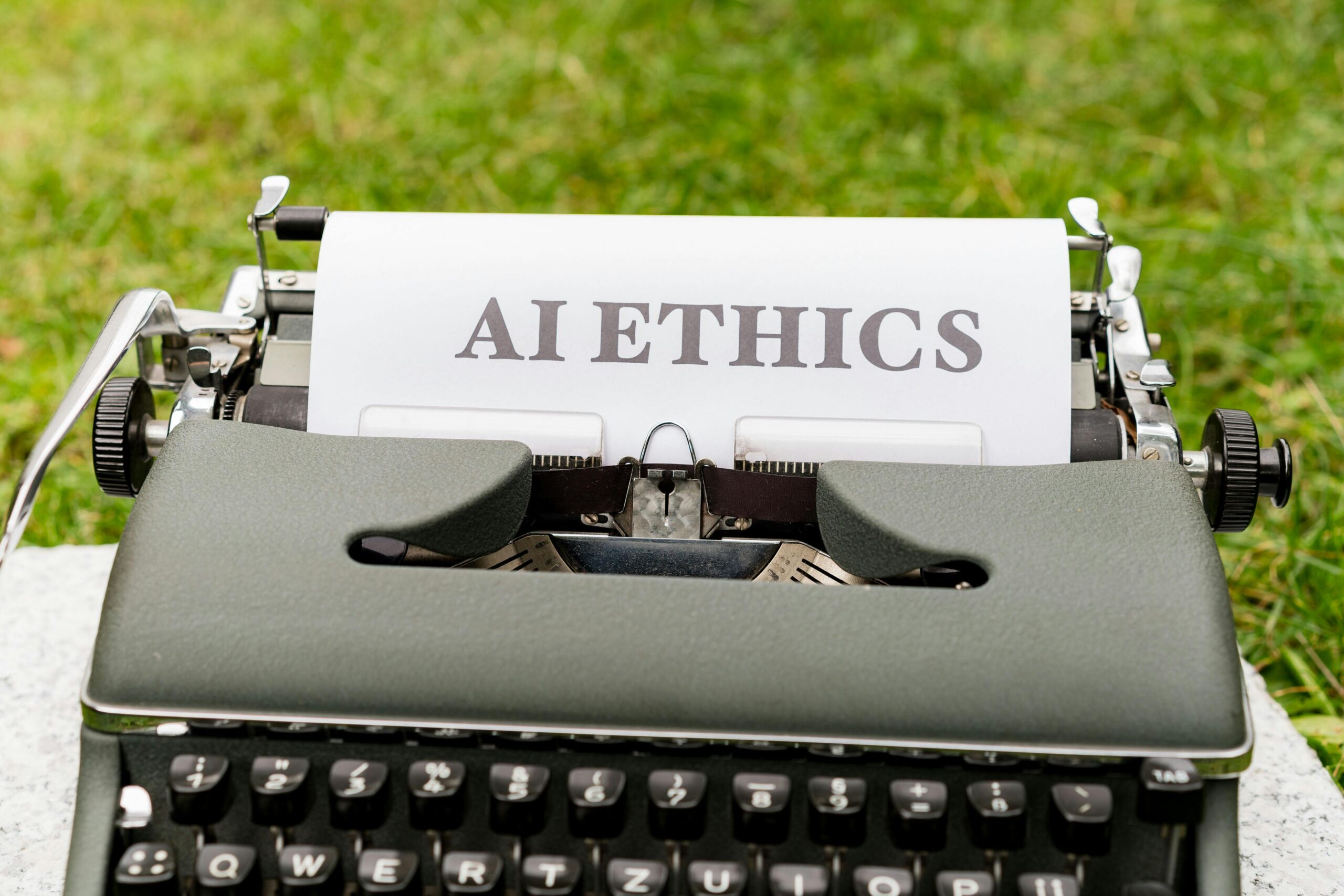
The ethical algorithm isn’t a distant ideal—it’s an urgent necessity and achievable goal. Every choice made in AI development today shapes tomorrow’s reality. By choosing wisely, acting responsibly, and remaining vigilant, we can harness artificial intelligence as a force for human flourishing, creating systems that enhance rather than diminish our humanity. The future remains unwritten, and we hold the pen.